Compare two or three written quotes for home, shop and school solar in Enugu, with dated prices and the exact models listed. Call now on +234 809 000 0000.
Solar installation in Enugu starts with two questions: how many hours of light you actually get, and how much petrol or diesel the gen burns to cover the rest. In Independence Layout, Trans-Ekulu, GRA, New Haven or Abakpa, the first step is the same: get two or three written quotes that list the exact inverter, battery and panel models.
This page is advertising for independent Nigerian solar installers. It does not install or sell anything itself. Call now on +234 809 000 0000, and the installer who quotes your job will work from your own appliances. Every price below is a figure published by a named seller or outlet in a stated month, and a current written quote is the only real number.
A hybrid system for a duplex or flat in Enugu, sized from your own appliances' rating plates and not from a guess. The installer should also look at your actual roof before quoting.
For an old inverter with tubular batteries that no longer last the night. An installer can quote a lithium swap or a new hybrid inverter and tell you what your existing wiring and DB can carry.
Shops, schools, clinics, churches and small offices in Enugu that want to cut diesel. The installer works from a load audit of your daytime equipment and the hours you run.
For a system that keeps tripping or a battery bank that has given up. An independent installer can inspect the fault, the protection devices and the earthing, then quote the repair in writing.
PVGIS modelling (SARAH2, 2005 to 2020) puts Enugu at about 1,447 kWh per kWp of panels per year, or 3.96 kWh a day. That is ahead of Lagos at 1,396, Ibadan at 1,412 and Benin City at 1,380, and behind Abuja at 1,534. The model assumes 14 percent system losses and a 10 degree tilt facing south, and it is before any dust on the glass.
Here is the working, as an illustration and not a promise. 3.6 kW of panels x 3.96 kWh/kWp/day is about 14.3 kWh a day on average. In July, the weakest modelled month at 3.11, the same panels give about 11.2 kWh (3.6 x 3.11), and in December, the strongest at 4.70, about 16.9 kWh (3.6 x 4.70). So ask your installer to size the system with the July number in mind.
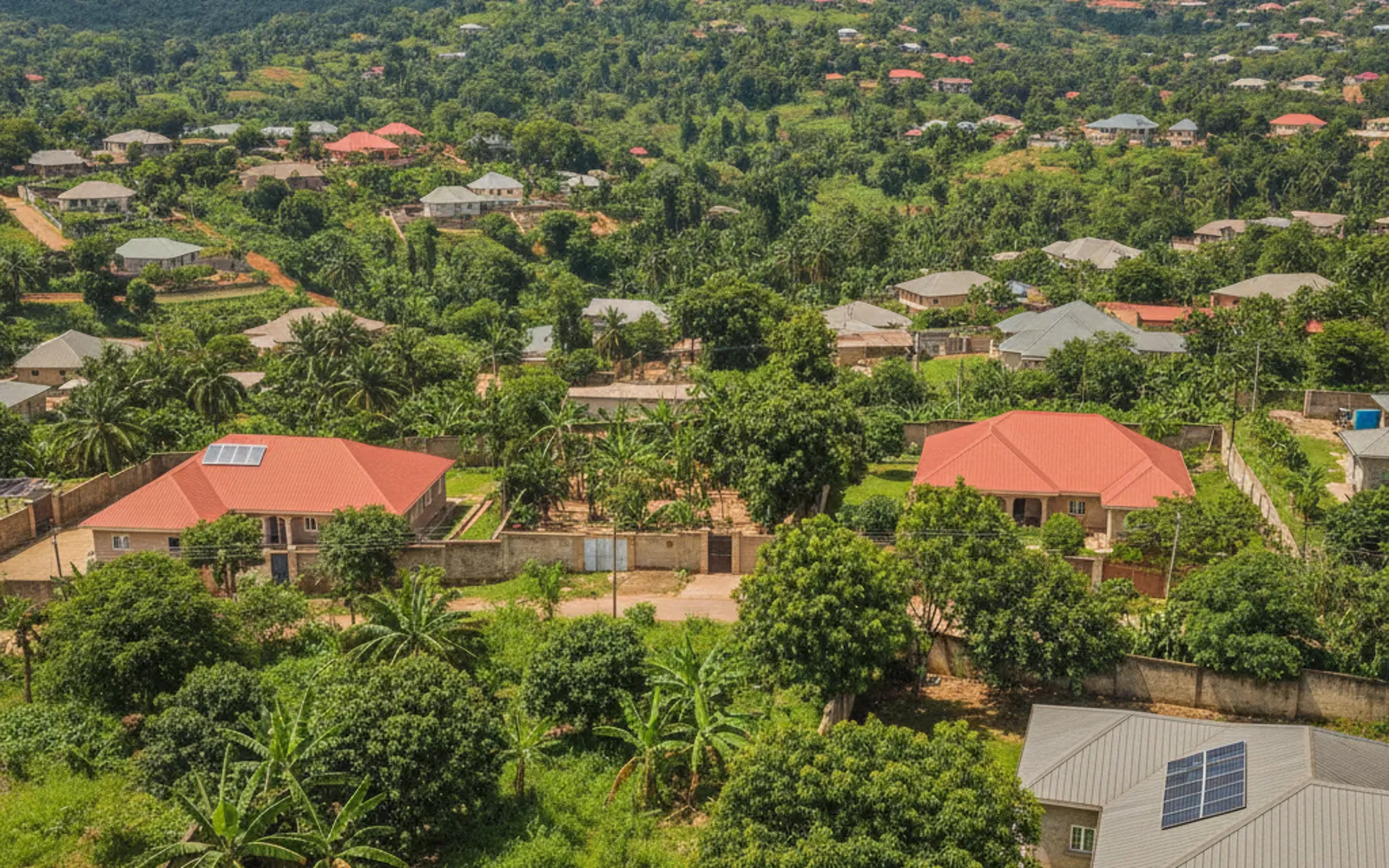
Parts of Enugu are hilly, so roofs and plots do not all sit flat and open. Ask the installer to come and look at your actual roof and where the panels will mount, because NEMSA guidelines as reported in April 2026 call for a sound roof and mounts. On dust, no measured soiling figure exists for Enugu, so be wary of anyone quoting a typical harmattan loss, and ask how the panels will be reached for cleaning.
Enugu is in the EEDC area, and in Enugu State the distributor is now MainPower. Under the Electricity Act 2023 states can regulate their own electricity markets, and Enugu State has its own regulator. Nairametrics reported on 21 July 2025 that the state regulator cut Band A to N160 per kWh from 1 August 2025, and this page has not checked for later changes. In NERC-regulated areas, Band A has been N209.50 per kWh since 1 July 2024, so check your own bill and your state regulator before you do any sums.
The grid itself has been shaky. The national grid collapsed repeatedly in 2024, about a dozen times by press counts, and twice in January 2026, on the 23rd and the 27th. A battery behind a hybrid inverter is what keeps your essentials running when light goes, whatever band your feeder is on.
On the gen side, here is an illustration at mid-October 2026 Lagos pump prices (Vanguard, 10 to 11 October 2026). A Sumec Firman ECO4990ES (3.0 kVA rated) is claimed by a Nigerian retailer to run up to 12 hours at 50 percent load on a 15 L tank, which is about 1.25 L an hour. Running it 5 hours at N1,400 per litre gives 1.25 x 5 x 1,400 = N8,750 a day in petrol, and Enugu pump prices will differ, so use your own receipts. Never run a generator indoors or near windows, because the fumes kill.
Published October 2026 package prices from Lagos sellers put a 3.5 kVA lithium system with panels at roughly N3.1 to N3.4 million. Mercury Direct listed a 3.5 kVA hybrid with 5 kWh of lithium and 8 x 450 W panels, installation included, at N3,400,000 on 14 October 2026. SMK Solar listed a 3.5 kVA system with 5 kWh of lithium and 6 x 450 W panels at N3,121,000 the same day, so compare panel count and what installation covers. These are single Lagos sellers' listings, not this site's quotes, and naira prices move with the exchange rate.
BusinessDay (17 February 2026) put professional installation alone at N150,000 to N800,000. Ask every installer to write the exact models, warranty terms and VAT treatment on the quote, and keep your receipts. The Federal Competition and Consumer Protection Act 2018 gives a right to return goods that do not match the agreed specification for a full refund (s 122, as quoted by Templars in June 2025). Industry experts quoted by NAN via Peoples Gazette on 8 July 2026 say batteries, inverters and panels are among the most counterfeited items, so check serial numbers, QR codes and warranty papers, and buy from authorised dealers (industry views, not a regulator warning).
NEMSA guidelines as reported in April 2026 say rooftop solar PV must be installed only by NEMSA-certified electrical contractors. NEMSA keeps a directory at nemsa.gov.ng/directory/ and a verification page at nemsa.gov.ng/verification/, so ask the installer for their competency certificate and look them up. The pages on solar system prices in Nigeria, home solar installation and inverter and battery installation go deeper on each point.
PVGIS modelling puts Enugu at about 1,447 kWh per kWp per year, or 3.96 kWh a day, with December the best month at 4.70 and July the weakest at 3.11. That is ahead of Lagos (1,396) and Port Harcourt (1,271) and behind Abuja (1,534). These are model figures before dust, and an installer should size the battery and panels from your own load.
This page has no Enugu-specific price. Published October 2026 package prices from Lagos sellers put a 3.5 kVA lithium system with panels at roughly N3.1 to N3.4 million, and BusinessDay (17 February 2026) gave N2 to N3 million for 3 to 4 kVA systems. Package contents, delivery and installation differ, so a current written quote from an Enugu installer is the real number.
Nairametrics reported on 21 July 2025 that the Enugu State regulator cut Band A to N160 per kWh from 1 August 2025, against N209.50 in NERC-regulated areas. Bands B to E differ by DisCo, and this page has not checked for later changes in Enugu. Read your own bill and ask the state regulator.
Ask for their NEMSA competency certificate, then look them up in the directory at nemsa.gov.ng/directory/ or on the verification page at nemsa.gov.ng/verification/. Some Lagos sellers say they use local partners outside Lagos, so ask who will actually do the work at your house in Enugu and check that person's certificate.
Written quotes from independent Nigerian solar installers.